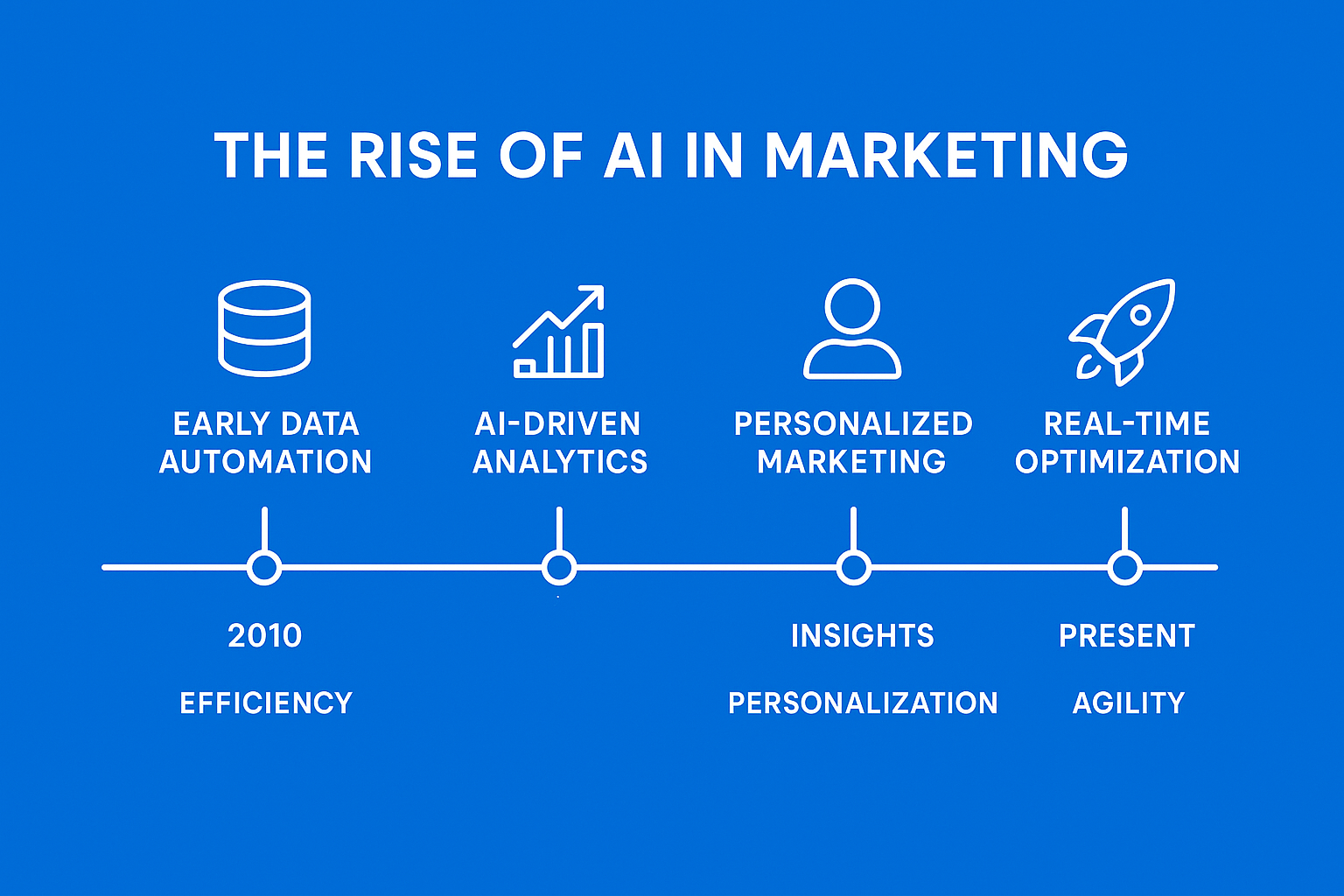
Artificial intelligence has moved from being an experimental technology to becoming a practical business tool.
In 2026, companies of different sizes are using AI to support marketing, customer communication, research, content creation, analysis, automation, and other business activities.
However, successful AI adoption is not simply about using as many AI tools as possible. Businesses need to identify where AI creates genuine value.
AI as a Marketing Assistant
One of the easiest applications of AI is content support.
Businesses can use AI to brainstorm article ideas, create content outlines, generate social media concepts, summarize information, and improve drafts.
Recent SMB research indicates that AI is already widely used for marketing tasks, especially content creation, while businesses also report using it to save time and generate ideas.
The important point is that AI should support the marketing team rather than eliminate strategic thinking.
Faster Content Production
Traditional content production can take considerable time.
AI can help businesses move from an idea to a first draft more quickly.
For example, a marketer could use AI to generate:
- Blog outlines
- Email drafts
- Social media ideas
- Video scripts
- Product descriptions
- FAQ structures
Human editors should then check accuracy, tone, originality, and relevance.
Better Customer Support
AI-powered assistants can help answer routine questions.
Customers may want to know opening hours, delivery policies, product specifications, or account procedures.
Automating simple questions can allow human employees to focus on more complicated situations.
However, businesses should provide a clear path to human support when customers need it.
Data Analysis
Businesses generate large amounts of information.
AI can help identify patterns in sales, customer behavior, website traffic, and marketing performance.
For example, a business might discover that one customer segment produces higher repeat purchases than another.
These insights can improve marketing and product decisions.
Personalized Marketing
AI can help businesses analyze customer behavior and create more relevant experiences.
A retailer could recommend products based on previous purchases. An email campaign could use different messages for different customer groups.
Personalization can make marketing more useful, but businesses must handle customer data responsibly.
AI and Search
Search behavior is also changing.
People increasingly use AI-powered systems to discover information, compare products, and answer questions.
This means businesses should not think only about traditional search rankings. They should also create clear, authoritative content that answers real customer questions.
Some 2026 marketing discussions refer to this broader approach as generative engine optimization, or GEO.
AI Does Not Replace Strategy
A common mistake is assuming that an AI-generated campaign automatically becomes a good campaign.
It does not.
AI can produce incorrect information, generic language, unsuitable recommendations, or content that does not match the brand.
Recent business experiences emphasize the importance of human oversight and strategic judgment when using AI for marketing.
Start With Practical Use Cases
Businesses do not need to transform everything at once.
Choose one repetitive task.
For example:
- Creating weekly social media ideas
- Summarizing customer feedback
- Drafting email campaigns
- Organizing research
- Creating internal documentation
Measure the time saved and quality of the results.
Then expand carefully.
Protect Important Information
Do not automatically place sensitive customer, financial, legal, or confidential company information into an AI service.
Establish internal rules for what employees can and cannot share with AI tools.
AI adoption should include security and privacy considerations.
Measure the Return
The value of AI should ultimately be connected to business outcomes.
Ask:
- Does it save time?
- Does it reduce costs?
- Does it improve customer service?
- Does it increase productivity?
- Does it improve revenue?
- Does it help employees make better decisions?
If the answer is no, the tool may not be worth continuing.