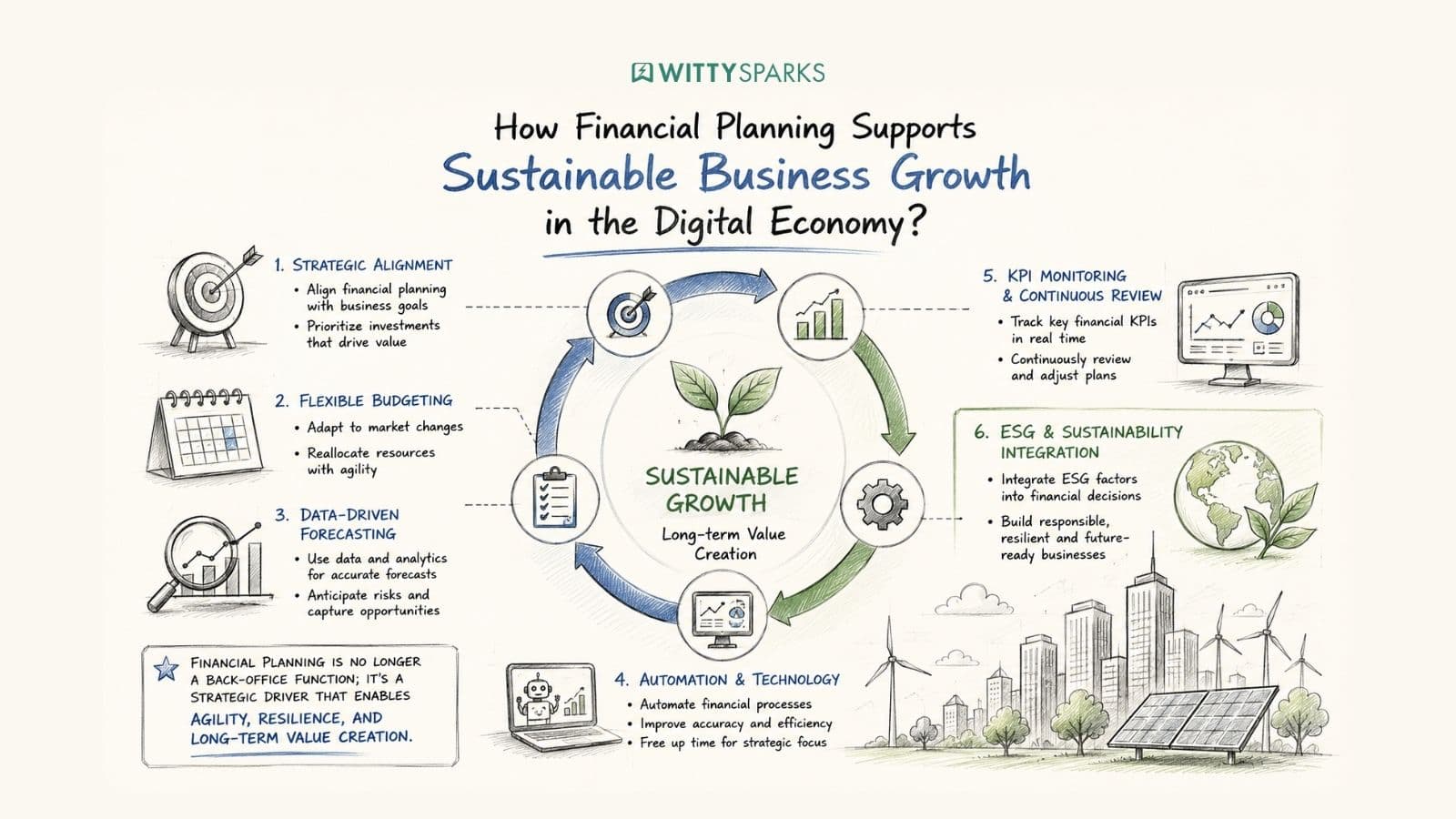
Introduction
Economic uncertainty has become a defining characteristic of today’s global business environment. Inflation, fluctuating interest rates, geopolitical tensions, supply chain disruptions, and changing consumer behavior continue to challenge businesses of all sizes. Whether managing a startup, a small business, or a multinational corporation, business leaders must be prepared to navigate unpredictable economic conditions.
While uncertainty cannot be eliminated, its impact can be significantly reduced through smart financial planning. Businesses that develop strong financial strategies are better equipped to maintain stability, protect profitability, and identify new growth opportunities even during periods of economic instability.
This article explores how businesses can adapt to economic uncertainty by implementing effective financial planning strategies that support long-term sustainability and resilience.
Understanding Economic Uncertainty
Economic uncertainty refers to situations where future financial conditions become difficult to predict. Businesses may experience sudden changes in customer demand, increased operational costs, tighter credit markets, or unexpected disruptions in global trade.
Common factors contributing to economic uncertainty include:
- Rising inflation
- Interest rate changes
- Currency exchange fluctuations
- Political instability
- Global health crises
- Supply chain interruptions
- Technological disruption
- Shifting consumer preferences
Although these factors are largely beyond a company’s control, organizations can prepare themselves through careful planning and sound financial management.
Why Financial Planning Matters More Than Ever
Financial planning is more than creating an annual budget. It is a continuous process of analyzing financial performance, forecasting future conditions, managing risks, and making informed decisions.
Businesses with comprehensive financial plans often benefit from:
- Better cash flow management
- Improved investment decisions
- Reduced financial risk
- Stronger business resilience
- Increased stakeholder confidence
- Greater flexibility during market changes
Instead of reacting to crises, financially prepared businesses can respond strategically.
1. Strengthen Cash Flow Management
Cash flow is often considered the lifeblood of any business. Even profitable companies can struggle if they lack sufficient cash to meet daily operational expenses.
To improve cash flow:
- Monitor income and expenses regularly.
- Invoice customers promptly.
- Reduce unnecessary operating costs.
- Negotiate favorable payment terms with suppliers.
- Maintain an emergency cash reserve.
Healthy cash flow allows businesses to continue operating during temporary revenue declines.
2. Create Multiple Financial Scenarios
Economic conditions rarely follow a single predictable path. Business leaders should prepare for multiple possibilities rather than relying on one financial forecast.
Scenario planning may include:
Best-Case Scenario
Revenue exceeds expectations, allowing expansion and increased investment.
Moderate Scenario
Business performance remains stable with manageable fluctuations.
Worst-Case Scenario
Sales decline significantly due to economic downturns or unexpected market disruptions.
Preparing for different outcomes enables faster and more confident decision-making.
3. Build an Emergency Financial Reserve
Unexpected expenses can arise at any time. Companies without financial reserves often struggle to survive prolonged economic challenges.
Financial experts generally recommend maintaining reserve funds that can cover several months of operating expenses.
Emergency reserves help businesses:
- Continue payroll
- Pay suppliers
- Cover rent and utilities
- Maintain essential operations
- Avoid excessive borrowing
Financial stability begins with adequate liquidity.
4. Diversify Revenue Sources
Relying heavily on one customer, one product, or one market increases financial risk.
Businesses can reduce vulnerability by:
- Launching complementary products
- Expanding into new markets
- Developing subscription-based services
- Building online sales channels
- Serving multiple customer segments
Revenue diversification creates greater stability during economic downturns.
5. Improve Budget Management
Budgets should be reviewed regularly rather than once per year.
Effective budgeting includes:
- Tracking actual spending
- Identifying unnecessary expenses
- Prioritizing essential investments
- Updating financial assumptions
- Measuring performance against objectives
Flexible budgets allow businesses to adapt quickly when market conditions change.
6. Reduce Unnecessary Debt
Borrowing can support business growth, but excessive debt increases financial risk during uncertain periods.
Businesses should focus on:
- Paying down high-interest loans
- Avoiding unnecessary borrowing
- Improving credit management
- Maintaining healthy debt-to-income ratios
Lower financial obligations provide greater flexibility during economic slowdowns.
7. Invest in Technology That Improves Efficiency
Strategic technology investments often reduce operating costs over time.
Examples include:
- Cloud-based accounting software
- Automated payroll systems
- Inventory management platforms
- Customer relationship management (CRM) tools
- Business intelligence dashboards
Technology improves accuracy, reduces manual work, and supports faster decision-making.
8. Use Financial Data for Better Decisions
Modern businesses generate valuable financial data every day.
Key performance indicators (KPIs) include:
- Gross profit margin
- Net profit margin
- Cash flow ratio
- Operating expenses
- Customer acquisition cost
- Return on investment (ROI)
Regular financial analysis enables managers to identify problems before they become serious.
9. Manage Business Risks Proactively
Risk management should be integrated into every financial strategy.
Potential business risks include:
- Market volatility
- Supplier disruptions
- Cybersecurity threats
- Regulatory changes
- Natural disasters
- Currency fluctuations
Developing contingency plans helps businesses respond quickly when unexpected situations occur.
10. Invest in Employee Development
Employees play a critical role in maintaining productivity during challenging times.
Organizations should continue investing in:
- Professional training
- Leadership development
- Digital skills
- Financial literacy
- Employee well-being
A knowledgeable and motivated workforce contributes directly to long-term business success.
The Role of Leadership in Financial Planning
Strong financial planning requires effective leadership.
Successful business leaders:
- Make data-driven decisions.
- Communicate financial goals clearly.
- Encourage accountability.
- Promote transparency.
- Remain adaptable during uncertainty.
Leadership confidence often influences employee morale and stakeholder trust during difficult economic periods.
Common Financial Planning Mistakes to Avoid
Businesses should avoid several common mistakes that weaken financial resilience.
These include:
- Ignoring cash flow problems
- Overestimating future revenue
- Depending on a single income source
- Delaying financial reporting
- Failing to monitor expenses
- Making emotional investment decisions
- Neglecting risk management
Recognizing these mistakes early helps businesses improve financial performance.
Future Trends in Financial Planning
Financial planning continues to evolve as technology transforms business operations.
Emerging trends include:
Artificial Intelligence
AI assists with forecasting, budgeting, fraud detection, and financial analysis.
Predictive Analytics
Businesses increasingly use historical data to anticipate future financial performance.
Automation
Routine accounting tasks become faster and more accurate through automation.
Sustainable Finance
Environmental, social, and governance (ESG) considerations are becoming part of financial decision-making.
Real-Time Financial Reporting
Cloud technology allows business leaders to access financial information instantly, improving responsiveness.
Practical Tips for Long-Term Financial Success
Businesses can improve financial resilience by following these practical recommendations:
- Review financial performance monthly.
- Update budgets regularly.
- Monitor key financial indicators.
- Build adequate cash reserves.
- Diversify revenue streams.
- Invest strategically rather than impulsively.
- Reduce unnecessary operating expenses.
- Strengthen customer relationships.
- Continuously improve operational efficiency.
- Prepare contingency plans for unexpected events.
Consistent financial discipline is often more valuable than short-term cost-cutting.
Conclusion
Economic uncertainty is an unavoidable part of modern business. While companies cannot control global markets or economic events, they can control how they prepare for them.
Smart financial planning provides the foundation for business resilience by improving cash flow, reducing financial risk, supporting informed decision-making, and creating flexibility during changing market conditions.
Organizations that prioritize strategic financial management, invest in technology, diversify revenue sources, and maintain strong leadership are better positioned to navigate uncertainty while continuing to grow.
Ultimately, successful businesses are not those that avoid challenges, but those that plan carefully, adapt quickly, and remain focused on long-term sustainability regardless of economic conditions.